Need Help? +91 908-239-7306 / support@aumhimalaya.com
Flower Database
Ginger · Adrak
Zingiber officinale Roscoe · Ardraka · Shunthi · Vishvabheshaja
शृङ्गवेर · The universal medicine. The knobby horn-shaped rhizome in every Indian kitchen carries one of the oldest names in Ayurveda, and the word “ginger” itself comes from its Sanskrit name. Its flowers, a cone of green bracts and a purple-lipped blossom, are rarely seen at all.
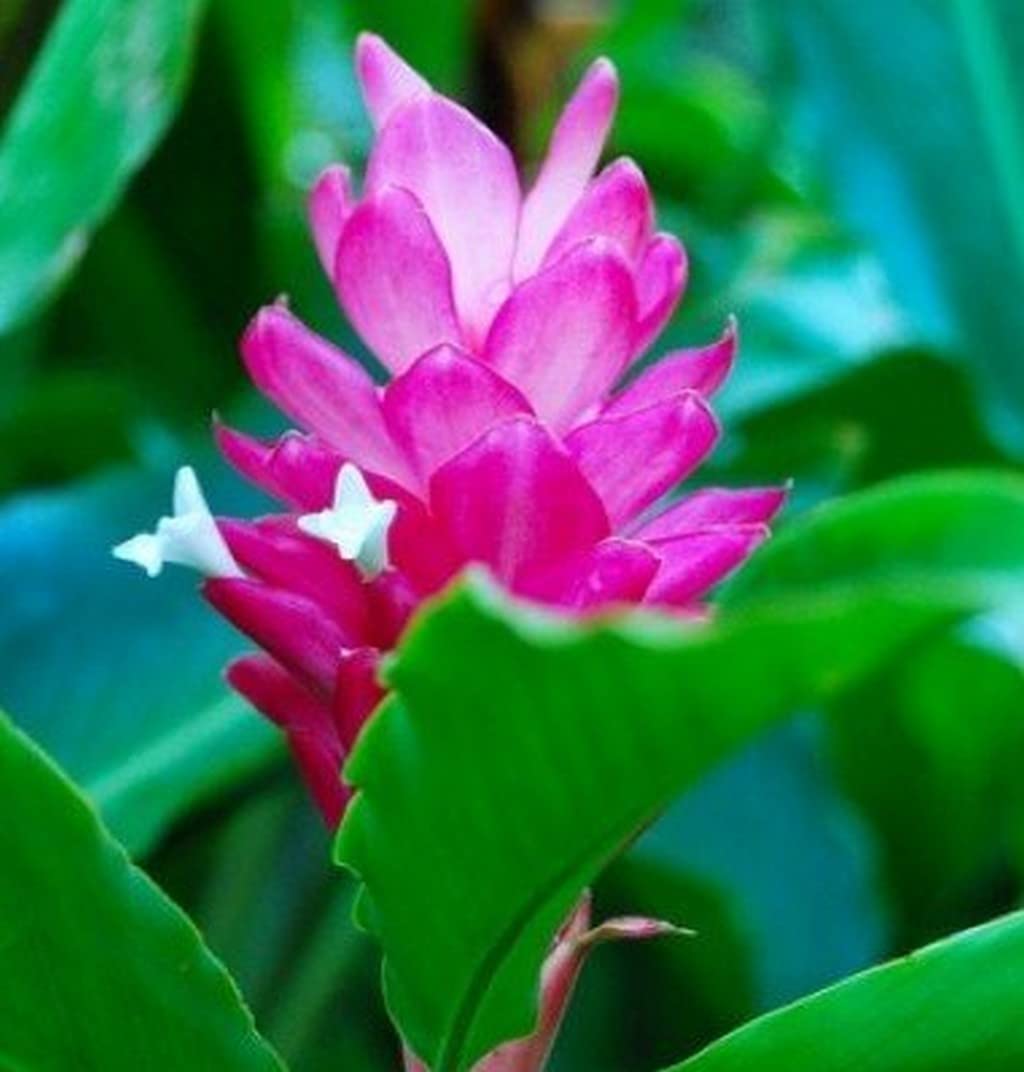
Ginger (Zingiber officinale) flower
Chapter 1
Botanical Profile
Ginger is a perennial, reed-like herb of the ginger family (Zingiberaceae, which also includes turmeric and cardamom), usually 0.6–1.2 metres tall. The part we eat is not a root but a thick, knobby, branching underground stem, the rhizome. The narrow, lance-shaped leaves, 15–30 cm long, are arranged in two ranks along the upright stems and give off a fresh, lemony-ginger scent when bruised. It is native to tropical South-east Asia and has been cultivated in India for thousands of years. India is now the world’s leading producer, with Kerala, Assam, Meghalaya, Arunachal Pradesh and Karnataka at the front. The pungency comes from gingerols, which turn into the even sharper shogaols when ginger is dried, and the aroma from zingiberene and other oils.
The flower is a rarity. Cultivated ginger is grown from rhizome pieces, and many clones seldom flower, so the blossoms are not often seen. When they do appear, in the monsoon, a separate leafless stalk of 15–25 cm rises straight from the rhizome, topped by a cone-like spike, 5–8 cm long, of overlapping green bracts with pale edges. From between the bracts emerge, one at a time, short-lived flowers with a tubular, yellow-green three-lobed corolla and a dark purple lip speckled with cream or yellow, which is the showy petal-like part. Each flower has a single fertile stamen. Ginger rarely sets seed.
Illustration: the cone-like flower spike, an open flower with its purple lip, and the rhizome
| Feature | Description |
|---|---|
| Family | Zingiberaceae (ginger family) |
| Habit | Perennial reed-like herb, 0.6–1.2 m; knobby branching rhizome |
| Leaves | Narrow, lance-shaped, 15–30 cm, in two ranks; aromatic |
| Flower spike | On a separate leafless stalk of 15–25 cm; cone-like, 5–8 cm, with overlapping green bracts |
| Flower | Yellow-green three-lobed corolla; dark purple, cream-speckled lip; one fertile stamen; rarely produced and seldom sets seed |
| Propagation | By rhizome pieces with buds (“eyes”) |
| Key constituents | Gingerols, shogaols, zingerone, zingiberene and other essential oils |
| Habitat | Warm, humid, partly shaded tropical and subtropical lowlands and hills; rich, well-drained soil |
Many “ginger flowers” are other plants. The tall red and pink “ginger flowers” used in bouquets are usually Alpinia purpurata (red ginger) or Etlingera (torch ginger), and fragrant white “ginger lilies” are Hedychium. They are relatives, not the culinary ginger.
Chapter 2
Names in Sanskrit & Their Meaning
| Sanskrit | Transliteration | Meaning |
|---|---|---|
| आर्द्रक | Ardraka | “Moist or fresh”: the name for fresh ginger (Hindi Adrak) |
| शुण्ठी | Shunthi | Dried ginger (Hindi Saunth) |
| शृङ्गवेर | Shringavera | “Horn-bodied” (shringa, horn, plus vera, body), for the horn-shaped rhizome; the origin of the word ginger |
| विश्वभेषज | Vishvabheshaja | “Universal medicine” |
Regional names: Adrak (fresh) and Saunth (dried) (Hindi), Ada (Bengali), Ale (Marathi), Adu (Gujarati), Inji (Tamil), Allam (Telugu), Hasi shunthi (Kannada), Inchi (Malayalam). The English word comes from the Sanskrit shringavera, through Pali and Greek zingiberis and Latin zingiber.
Chapter 3
Mythology & Cultural Significance
Ginger has few Puranic tales, but it is one of the most deeply loved plants in Indian food and healing.
The Universal Medicine
In Ayurveda, dried ginger is so valued that it is called Vishvabheshaja, the universal medicine. It is one of the three “hot” spices of the classical Trikatu (ginger, long pepper and black pepper), said to kindle the digestive fire.
Word of the Spice Road
The word “ginger” itself travelled from Sanskrit through Greek and Latin into English. Roman traders imported it from India, and medieval Europe prized it as a precious spice.
Confucius and His Ginger
The Analects record that Confucius never ate a meal without ginger on the table, an early record of its place as a daily digestive.
Inji Puli at the Onam Sadya
In Kerala, a sweet-sour-hot ginger relish called puli inji (or inji curry) always has a place on the Onam sadya banana leaf, to help digest the rich feast.
Winter Warmers
Across India, ginger tea (adrak chai), ginger candy (alepak in Maharashtra) and ginger laddus are part of winter and monsoon care, and a pinch of saunth is added to postnatal foods.
A Garden Gift of the Monsoon
In Tamil Nadu, fresh ginger and turmeric plants are traditionally tied to the Pongal pot, an offering of the new harvest to the sun.
Chapter 4
Esoteric & Energetic Understanding
In spiritual interpretation, ginger is the plant of inner fire and movement. These are traditional and symbolic associations, not scientific claims.
- Agni (digestive fire): its heat kindles digestion, and by extension the fire of transformation and of willpower at the solar plexus (Manipura).
- Hidden underground: the power of ginger lies in its hidden rhizome, a symbol of inner strength that does not need display.
- The horn: its Sanskrit name, “horn-bodied”, suggests a horn or peak, a symbol of ascent and courage.
- Moving the stuck: ginger is said to clear stagnation (ama) in the body, and symbolically in feelings that have stopped moving.
- A rare flower: because it seldom blooms, a ginger flower is a reminder that precious things may remain hidden for a long time.
The fire that warms is the fire that moves.
Chapter 5
Ayurvedic Uses
The rhizome is the main part used, fresh (ardraka) or dried (shunthi). They are used as juice, powder, decoction, tea, candy, paste and oil.
Ayurvedic Profile
- Rasa: Katu (pungent)
- Guna: Dry ginger: Laghu, Snigdha (light, slightly unctuous). Fresh: Guru, Tikshna (heavier, sharper)
- Virya: Ushna (warming)
- Vipaka: Madhura (sweet)
- Dosha: pacifies Vata and Kapha; may increase Pitta in excess
Traditional Uses
- Sluggish digestion, gas, colic and loss of appetite (agnimandya)
- Nausea and vomiting
- Cough, cold, congestion and sore throat
- Joint pain and stiffness (amavata, sandhivata)
- Menstrual cramps and cold limbs
Classical Preparations
- Trikatu: ginger, long pepper and black pepper
- Shunthi Churna with warm water or honey
- Ardraka Swarasa: fresh juice with honey
- Adrak kadha and ginger candy (ardraka khanda)
Science So Far
Ginger has some of the best evidence among traditional herbs. Trials support its use for nausea, including in pregnancy and after surgery or chemotherapy, and it may modestly ease menstrual pain and knee osteoarthritis. Evidence for motion sickness and other uses is mixed.
Health note. Ginger as food is generally safe. Large amounts may cause heartburn, stomach upset or gas. It may slightly slow blood clotting, so check with your doctor if you take blood thinners or have surgery planned. It may also lower blood sugar and blood pressure, so be careful with related medicines. People with gallstones should be cautious. Ginger is commonly used for pregnancy nausea, but pregnant women should check the amount with their doctor. Applying fresh ginger to the skin can cause irritation in some people. Consult a qualified practitioner before therapeutic use.
Chapter 6
Ginger Flower Remedy
In flower-remedy practice, a remedy is a subtle, energetic preparation made from the flower’s imprint in water, not an herbal extract. Ginger is approached as the flower of warmth, courage and motivation.
Emotional States
- Feeling cold, stuck or stagnant
- Lack of drive, hesitation to begin
- Low enthusiasm and a flat or sluggish mood
- Fear of taking the first step
Positive Qualities
- Inner warmth and courage
- Motivation and forward movement
- Enthusiasm and vitality
- Confidence to act on one’s hidden strengths
Flower remedies are a complementary, spiritual approach. There is insufficient scientific evidence that they treat emotional or physical health conditions, and they should not replace medical or psychological care.
Chapter 7
In the Company of Ginger
A patch of ginger in the monsoon is a lush stand of fresh green reeds, with a clean, spicy smell when the leaves are brushed. People often describe the following (personal experiences, not guaranteed effects):
Emotional
Brightness and a gentle lift in mood, a feeling of warmth.
Mental
Freshness and a wake-up quality in the mind, with the aroma sharpening attention.
Spiritual
Courage to begin, and respect for strength that is quiet and hidden.
Simple Practices
- Slow tea: slice fresh ginger into hot water, sip slowly and feel the warmth spread.
- Crush and breathe: brush a leaf or crush a piece of rhizome and inhale slowly.
- Plant a piece: plant a fresh rhizome piece with a bud in partial shade, in rich, well-drained soil, ideally before or at the start of the monsoon. Harvest in 8–10 months, and watch for the rare flower.
- Winter ritual: make a batch of ginger candy or a spiced ginger tea to share with family.
- Be kind to your skin: ginger can irritate sensitive skin, so wash your hands after handling it in quantity.
Flowers are conscious, intelligent forces.
Explore Aum Himalaya’s Indian flower remedies for body, mind and emotions.
Shop Remedies Flowers Database