
Need Help? +91 908-239-7306 / support@aumhimalaya.com
Flower Database
Tulsi · Holy Basil
Ocimum tenuiflorum L. · syn. Ocimum sanctum L. · Sacred Basil of India
तुलसी · The Queen of Herbs and the Goddess in the courtyard. For thousands of years, Tulsi has been worshipped daily in Indian homes, offered to Vishnu and Krishna, and trusted in Ayurveda as a plant for the breath, the mind and the spirit.
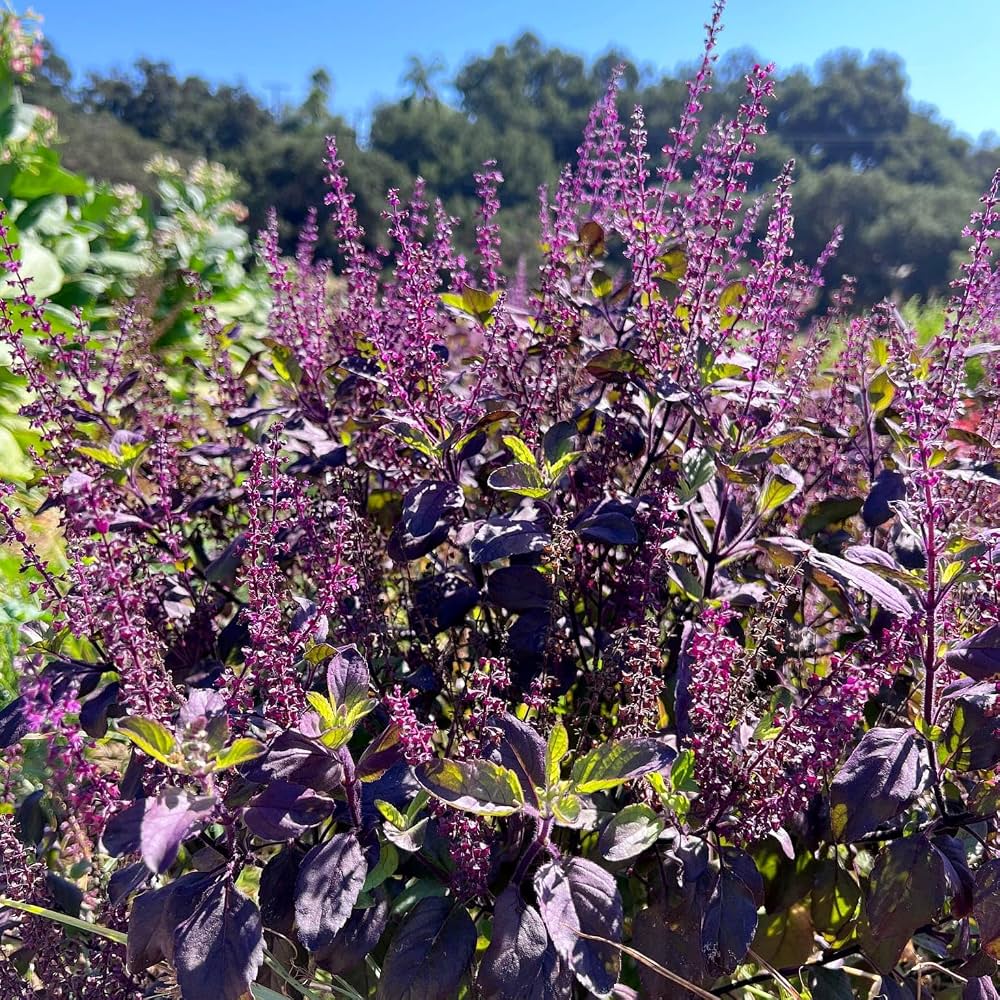
Tulsi (Ocimum tenuiflorum)
Chapter 1
Botanical Profile
Tulsi is an erect, many-branched, aromatic subshrub, usually 30–60 cm tall (sometimes up to a metre), of the mint family (Lamiaceae). Its stems are hairy and its simple, oppositely arranged leaves are strongly scented, either green or purplish. It is native to the Indian subcontinent and is widely grown across tropical Asia. The accepted botanical name is Ocimum tenuiflorum; Ocimum sanctum is the older name still seen everywhere.
Small purplish or pinkish-white flowers grow in whorls along slender spikes called manjari, which ripen into tiny nutlets that self-seed. Traditionally, several kinds are recognised: Rama / Shri Tulsi (green leaves, mild), Krishna / Shyama Tulsi (purple leaves, more pungent) and Vana Tulsi (wild tulsi, a different species, Ocimum gratissimum). Its main aroma compounds include eugenol, caryophyllene and rosmarinic and ursolic acids.
Illustration: opposite leaves and a purple flower spike (manjari)
| Feature | Description |
|---|---|
| Family | Lamiaceae (mint family) |
| Habit | Erect aromatic subshrub, 30–60 cm; hairy stems; short-lived perennial |
| Leaves | Simple, opposite, oval, green (Rama) or purple (Krishna); highly aromatic |
| Flowers | Small purple-white flowers in whorled spikes (manjari) |
| Fruit | Tiny nutlets (seeds) |
| Key compounds | Eugenol, caryophyllene, rosmarinic acid, ursolic acid, flavonoids |
| Habitat | Warm, sunny sites; grown in courtyards, pots and fields across India |
Tulsi is not ordinary basil. Sweet basil (Ocimum basilicum) used in Italian cooking is a different plant. Some “holy basil” sold abroad as “Kapoor” tulsi is also a different species, so check the botanical name on any product.
Chapter 2
Names in Sanskrit & Their Meaning
| Sanskrit | Transliteration | Meaning |
|---|---|---|
| तुलसी | Tulasi | Traditionally glossed as “the incomparable one”, that which has no equal |
| वृन्दा | Vrinda | The name of the Goddess in the Tulsi legend; Vrindavan means “forest of Tulsi” |
| हरिप्रिया | Haripriya | “Beloved of Hari (Vishnu)” |
| सुरसा | Surasa | “Of excellent essence or flavour” |
| भूतघ्नी | Bhutaghni | “Destroyer of harmful influences”, as used in classical lists |
| अपेतराक्षसी | Apetarakshasi | “Repeller of negative forces” |
| बहुमञ्जरी | Bahumanjari | “With many flower-spikes” |
Regional names: Tulsi (Hindi, Bengali, Gujarati), Tulas (Marathi), Thulasi (Tamil, Malayalam), Tulasi (Telugu, Kannada), Holy Basil (English).
Chapter 3
Mythology & Cultural Significance
Vrinda & Shaligram
In the Puranic story, Vrinda was the devoted wife of the demon Jalandhara, and her purity protected him. When Vishnu took Jalandhara’s form to break her vow, her husband was slain. Heartbroken, Vrinda cursed Vishnu to become a stone (the Shaligram) and gave up her life. Tulsi grew from where she fell, and Vishnu promised to accept her always. Versions differ by region.
Tulsi Vivah
In the month of Kartik, Tulsi is married to Vishnu in the form of Shaligram or Krishna. The ceremony is celebrated in homes and temples with a decorated plant, lamps and songs, and it traditionally marks the start of the wedding season.
The Single Leaf
A well-loved tale tells of Satyabhama weighing Krishna against gold and jewels, and no wealth was enough. Rukmini placed a single Tulsi leaf with devotion on the scale, and it outweighed everything, a story that teaches that love is worth more than wealth.
Lakshmi on Earth
Tulsi is regarded as a form of Goddess Lakshmi, and no offering to Vishnu or Krishna is complete without a Tulsi leaf. Vaishnava devotees wear Tulsi bead malas for japa and as a sign of devotion.
The Courtyard Altar
Many Hindu homes keep Tulsi in a raised planter (Tulsi Vrindavan). It is watered at sunrise, circled in prayer and lit with a lamp at dusk. In many families, customs about when to pluck leaves, such as avoiding Ekadashi or after sunset, are kept.
A Leaf at Life’s End
A Tulsi leaf with Ganga water is traditionally placed in the mouth of the dying, a sign of the plant’s role as a guide at life’s threshold.
Chapter 4
Esoteric & Energetic Understanding
In spiritual interpretation, Tulsi is a living goddess and a doorway of devotion. These are traditional and symbolic associations, not scientific claims.
- Sattva: Tulsi is regarded as the most sattvic of plants, bringing purity, clarity and calm to the home.
- Anahata (heart) chakra: devotion (bhakti) and love, flowing as the heart opens to the divine.
- Protection: names like Bhutaghni and Apetarakshasi reflect its role as a guardian of the household and the mind.
- Daily practice: circling, watering and lighting a lamp teaches reverence for the living world and anchors a sense of rhythm.
- Two forms: bright Rama Tulsi and dark Krishna Tulsi are said to hold the soft and the intense sides of devotion.
Where Tulsi is tended, the home becomes a temple.
Chapter 5
Ayurvedic Uses
Leaves are the main part used; the seeds, roots and flower spikes are also mentioned in traditional sources. Tulsi is often called the “Queen of Herbs” and has long been taken as an herbal tea or decoction.
Ayurvedic Profile
- Rasa: Katu (pungent), Tikta (bitter)
- Guna: Laghu (light), Ruksha (dry)
- Virya: Ushna (warming)
- Dosha: balances Kapha and Vata; may increase Pitta in excess
Traditional Uses
- Cough, cold, congestion and breathing difficulty (kasa, shwasa)
- Fever (jwara) and seasonal ailments
- Digestive weakness, nausea and gas
- Stress, mental fatigue and low mood
- Skin complaints and insect bites, as a leaf paste
Science So Far
Small clinical studies suggest Tulsi may help with stress, mood and blood sugar, and it is described as an “adaptogen”. Reviews call the evidence promising but low in quality, and larger trials are needed.
Health note. A few leaves in tea are generally considered safe. Concentrated extracts are less studied. Tulsi may lower blood sugar and may affect blood clotting, so consult your doctor if you take diabetes or blood-thinning medicines or have surgery planned. Animal studies suggest it may affect fertility, so it is traditionally avoided in pregnancy and when trying to conceive. Consult a qualified practitioner before therapeutic use.
Chapter 6
Tulsi Flower Remedy
In flower-remedy practice, a remedy is a subtle, energetic preparation made from the flower’s imprint in water, not an herbal extract. Tulsi is approached as the flower of devotion, purification and inner peace.
Emotional States
- Feeling spiritually disconnected or empty
- A cluttered, restless or overwhelmed mind
- Heaviness, low spirits and fatigue of the heart
- Feeling unprotected or easily affected by surroundings
Positive Qualities
- Devotion, faith and trust
- Mental clarity and quiet
- Emotional purification and a fresh start
- Inner protection and steady peace
Flower remedies are a complementary, spiritual approach. There is insufficient scientific evidence that they treat emotional or physical health conditions, and they should not replace medical or psychological care.
Chapter 7
In the Company of Tulsi
Tulsi is a plant to live with at the door or on the windowsill. People often describe the following (personal experiences, not guaranteed effects):
Emotional
Comfort, sweetness and a gentle lifting of the mood, as the spicy-sweet fragrance fills the air.
Mental
Fresh clarity and focus; a small daily ritual that quiets mental chatter.
Spiritual
Reverence, protection and a sense that a goddess lives in the home.
Simple Practices
- Morning water: offer water and walk once around the plant with a silent prayer.
- Dusk lamp: light a small lamp at the Tulsi in the evening and sit quietly for a few minutes.
- Rub and breathe: gently touch a leaf and inhale slowly. Ask permission before plucking, and take only what you need.
- Grow it well: give it 4–6 hours of sun, well-drained soil and regular water, and pinch off flower spikes to keep it bushy (let a few seed).
- Tulsi tea: a few fresh leaves steeped in hot water is a comforting evening ritual.
A popular claim says Tulsi gives off oxygen 24 hours a day. That is a myth, since all plants use oxygen at night. Its real gifts are fragrance, ritual and calm.
Flowers are conscious, intelligent forces.
Explore Aum Himalaya’s Indian flower remedies for body, mind and emotions.
Shop Remedies Flowers Database